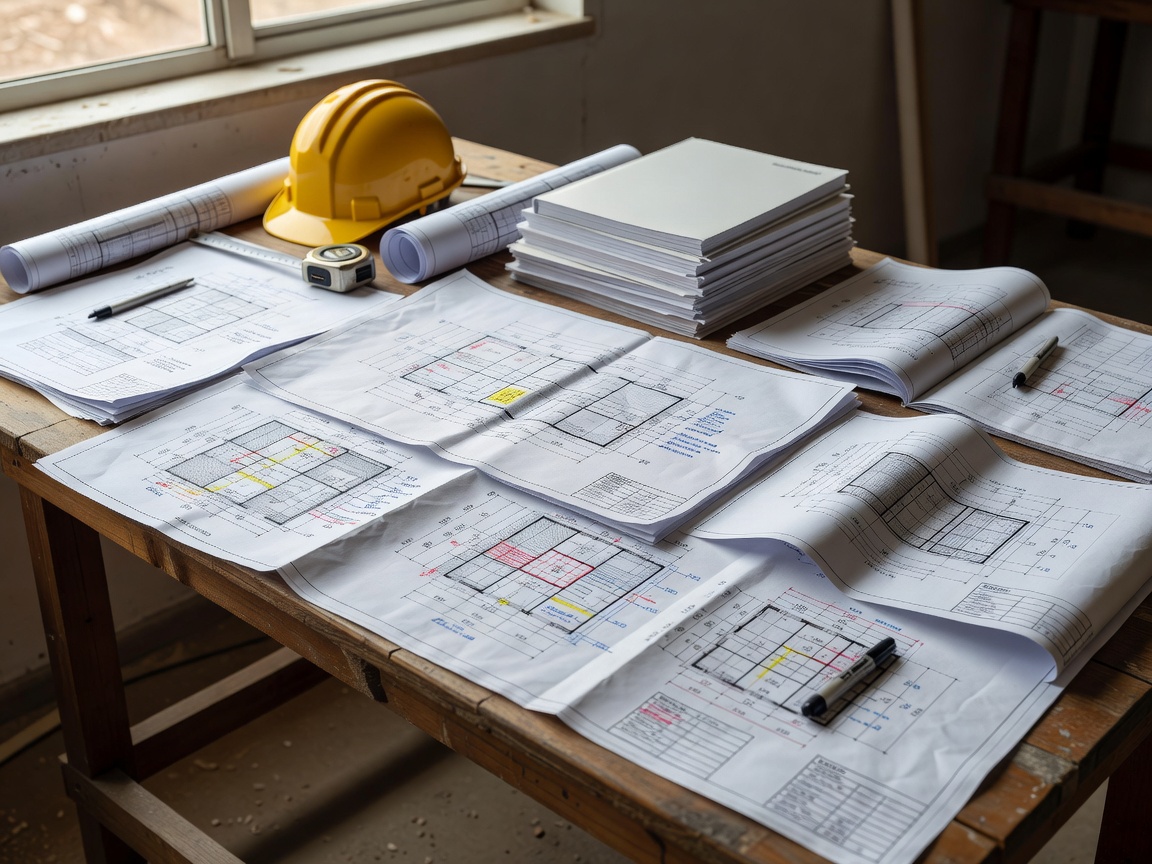
Documentation reduces uncertainty when it is current, traceable and understandable. It does not replace inspection, design, permits, specialist surveys or professional judgment. It gives the project team a common information base and makes unanswered questions visible.
Existing-condition records
Photographs should be organized by location, date, direction and subject. Written notes should identify visible condition, access restrictions and areas not inspected. Avoid editing images in a way that removes useful context. Store original files and maintain a clear naming convention.
Drawings and building records
Collect available plans, elevations, sections, surveys, alteration records, service information and previous reports. Record the source, date, scale and limitations of each document. A drawing should not be treated as current merely because it appears detailed.
Site notes and condition information
Site notes can capture boundaries, access, adjacent property, visible materials, drainage, ground condition and observed changes. Separate direct observations from interpretation. Flag issues that need structural, utility, environmental or regulatory review.
Communication records
Keep enquiries, responses, meeting notes, decisions and action owners together. A simple decision log can show why a planning assumption changed. This is especially useful when information arrives from several parties at different times.
Revision and document control
Every controlled document should have a title, reference, revision, date, author or responsible party and status. Superseded versions should be retained according to the project’s information-management process but clearly marked as superseded. Distribution lists help prevent work from proceeding against an old plan.
Documentation review list
- Photographs are indexed by location and date.
- Drawings show source, revision, scale and limitations.
- Site observations are separate from professional conclusions.
- Utility, structural and environmental questions are tracked.
- Decisions, actions and communication records are retained.
- Current documents are distinguishable from superseded versions.
Good for
Owners, planners and contractors who need a reliable project record before detailed planning and site coordination.
What to check
Confirm retention, access and privacy arrangements for photographs and records. Share technical conclusions only through the qualified professionals responsible for them.